
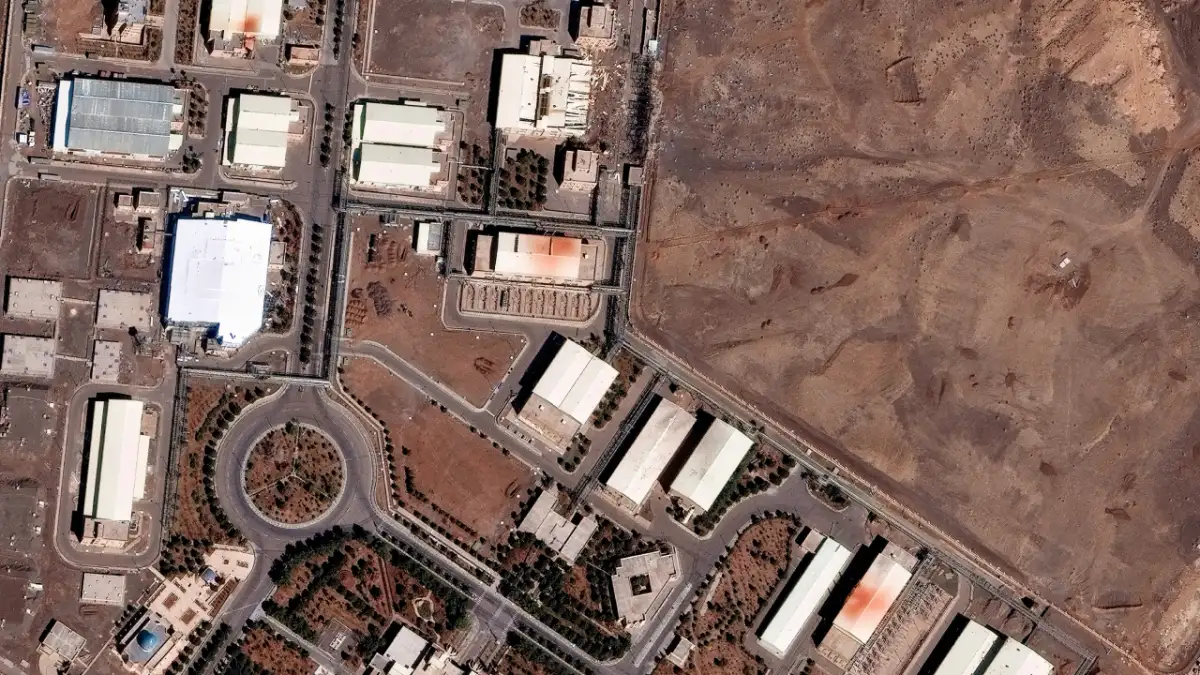
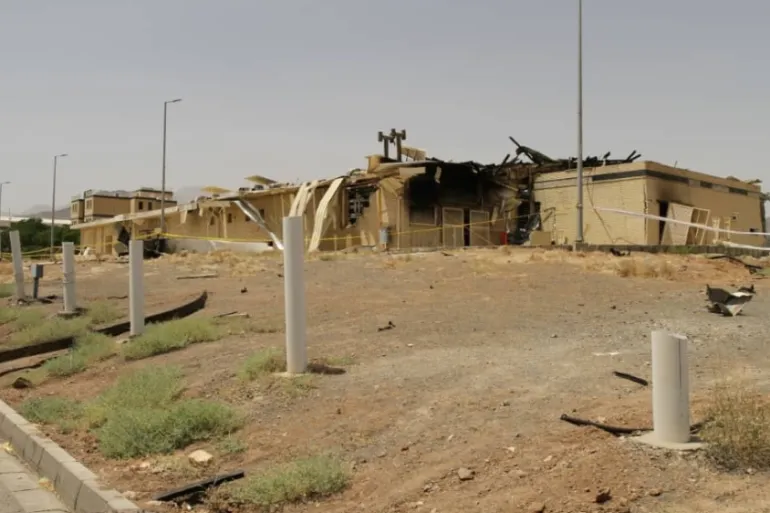
According to the official Iranian news agency Mizan, an airstrike struck Iran’s nuclear enrichment complex in Natanz on Saturday. As the Middle East conflict entered its fourth week, it was declared that there was no radiation leak.
Satellite photos show that numerous structures in Natanz, Iran’s primary enrichment complex, were damaged during the first week of the conflict. “No radiological consequence’ was anticipated from the previous strike, according to the United Nations nuclear watchdog.
It is located nearly 220 km (135 miles) southeast of Tehran. The nuclear complex was the target of US and Israeli bombings during the 12-day conflict between Iran and Israel in June 2025.
What makes Natanz significant?
Before the US attacked it with bunker-buster bombs in June, the Natanz nuclear facility was one of the main components of Iran’s nuclear program. It is located deep inside the mountains. Thousands of centrifuges that enrich uranium for both civilian energy use and possibly weapons-grade material were known to be housed there
Its size and layout make it particularly noteworthy. A large portion of the building is subterranean. It enables activities to continue even in the event of an airstrike.
In the past, the US military has created comprehensive plans for incursions into Iran. Approximately 2400 special operations forces were to be airlifted into Iran on more than 100 planes as part of Project Honey Badger. It was designed decades ago in the wake of the US embassy hostage crisis.
The US government, led by President Donald Trump, has long planned to track if forged near-bomb-grade uranium. According to a Bloomberg story, the plan called for the transportation of excavation equipment. Equipment such as a large bulldozer. It would be essential for soldiers in the event that they had to extract concealed Uranium.
IAEA responds to the Iranian nuclear plant attack
In response, the IAEA posted on X. They said, “Iran has informed the IAEA that the Natanz nuclear site was attacked today. Offside radiation levels have not been found to have increased. The report is being investigated by the IAEA.”
Rafael Mariano Grossi, the agency’s director general, has reaffirmed appeals for military caution in order to reduce the possibility of a nuclear disaster.










Be First to Comment