
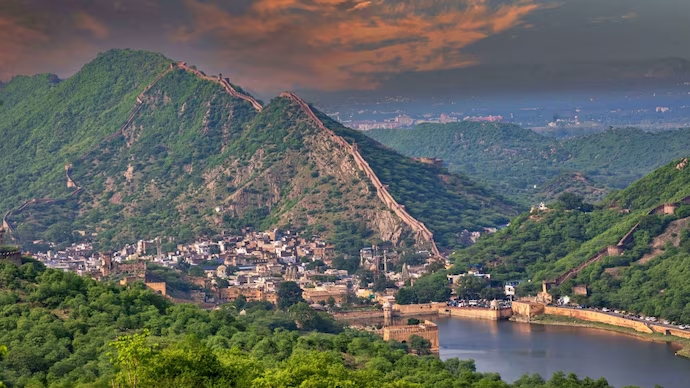
The Supreme Court has taken suo moto cognizance of the matter of the Aravalli hills terrain. It is scheduled to hear it on Monday amid a dispute over the authorised definition of the Aravalli Hills. According to the cause list, the case would probably be heard by a three-judge panel. The panel consisted of Chief Justice of India Surya Kant, Justice JK Maheswari, and Augustine George Masih.
In Re: “Definition of Aravalli Hills and Ranges and Ancillary Issue” is the title of the case.
The government’s stand on the Aravalli hills
Union Environment Minister Bhupendra Yadav, an Alwar MP, attempted to clarify that only 0.19 percent (278 sq km) of the entire Aravalli range may be mined in response to a flurry of protests. “Permissions for mining will only be granted after a sustainable mining plan has been prepared. As has been done in Saranda, Jharkhand,” he stated. More than 20 reserve forests and protected places in the Aravallis would be preserved. No permits will be given in Delhi.
Yadav said that the new definitely took into account a hill’s whole base spread in addition to its elevation. He stated that over 90% of the Aravallis would be saved. He gave the justification of the Aravalli range being defined as the distance of 500 meters between two or more hills.
It’s interesting to note that 278 sq km of the whole Aravallis region in Rajasthan, Gujarat, and Haryana are currently under mining. Data according to the ministry’s own reports.
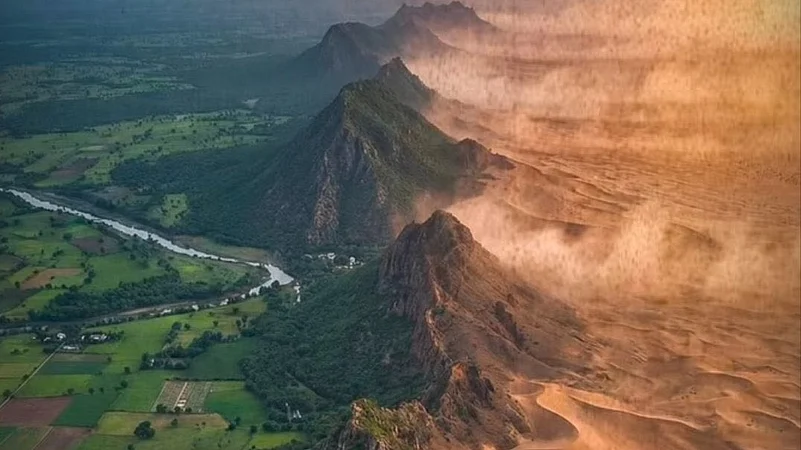
Rajasthan quietly permitted resorts & farmhouse
According to the Suo Moto, the Rajasthani government has covertly allowed a number of building projects to take place over large Portions of this historic hill range inside urban areas.
The state’s Model regulations for conservation of Hills in Urban Areas, 2024 was approved in April 2025. It redefined hill slopes and allowed “low-density” constructions on formerly protected land.
The rules clarify hills according to their gradient. Iisrtant middle-ground slopes between 8 and 15 degrees (Category B) are currently designed for farmhouses, resorts, wellness centres, amusement parks, and solar projects. The land slopes greater than 15 degrees (category C) are deemed undevelopable. Development is in line with basic urban planning in category A, which includes hills with slopes up to 8 degrees.









Be First to Comment