
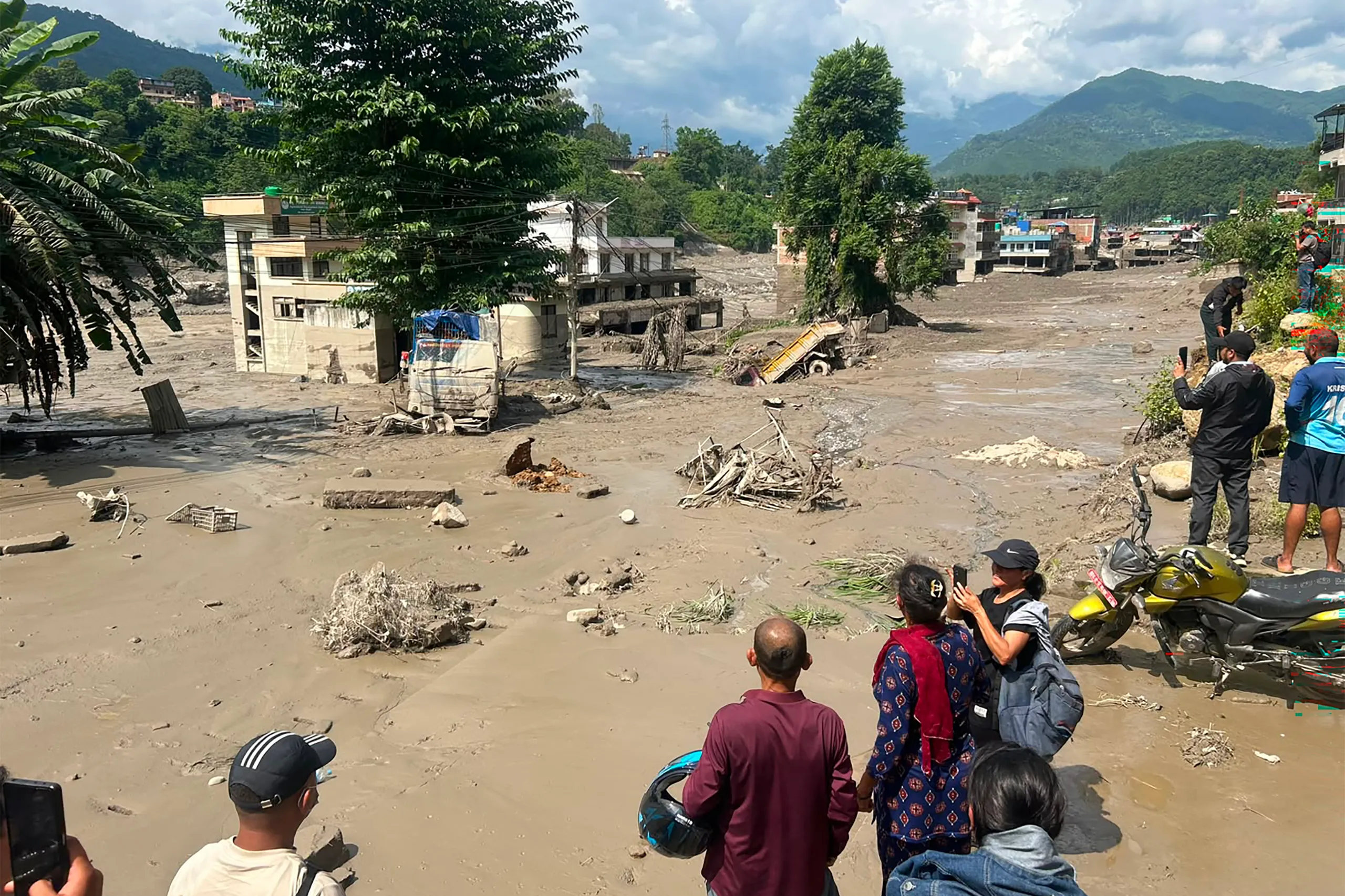
This week a major flash flood struck Nepal, wiping away communities and several project sides in an area bordering Tibet. It causes over 549 deaths and 1468 people missing. 14 helicopters and emergency response team have been sent out for rescue and assistance. It is reported by the Nepal army.
According to reports, the torrent came from Tibet and rushed across the Bhote Koshi River. Videos of the catastrophe showed people fleeing before the floodwaters engulfed them and destroyed bridges and buildings.
According to a statement from the Nepal army, the unexpected increase of water caused extensive damage into Timure in the Rusuwa district and the neighbouring syafrubesi region. According to the prime ministers office, in response to the deadly flood, members of the Nepal Army, Armed Police Force and Nepal police have been sent to the area and adjacent villages to step up rescue and relief operations.
A new risk of flooding appears
A lake fromed behind the barrier caused by Wednesday’s tragedy, promoting Nepal’s disaster management authorities to issue a warning of possible fresh flood along the Bhotekoshi river. Authorities are advising locals and rescuers near the lower riverbanks to relocate to safer areas because the lake is swelling and may overflow.
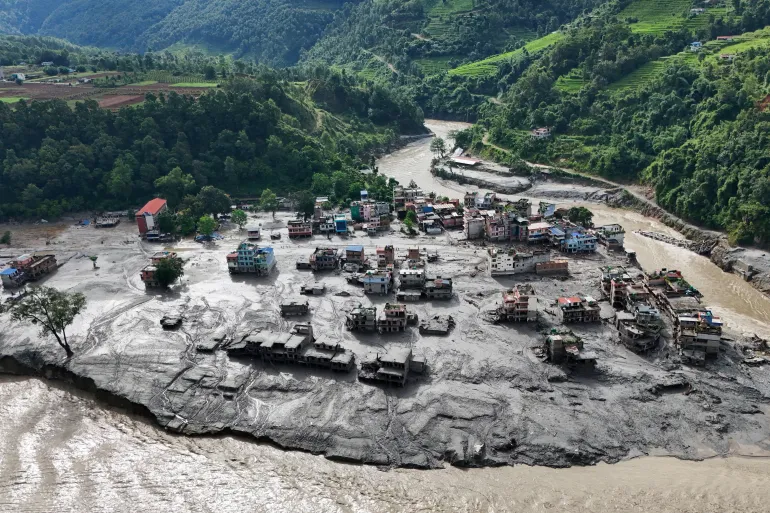
What led to the Nepal flash flood?
According to the US geological survey a glacier collapse and debris flow resulted in seismic activity and catastropic downstream effects in Tibet and Nepal.
According to early accounts, the flood and an avalanche were caused by an earthquake. Later, the USGS claimed that the glacier collapse was the cause of the seismic activity.
On Wednesday, the Trisuli river swelled up by up to 9 meters in only 30 minutes. It hurled boulders, ice, and muck roughly 170 KM across 7 districts in Nepal.
According to CCTV, a related mudslide also struck Gyirong in Tibet. It buried several highways beneath more than 2 merers of dirt.
Later, Satellite footage verified that the incident was the “glacier inclusive flood.”




Be First to Comment