
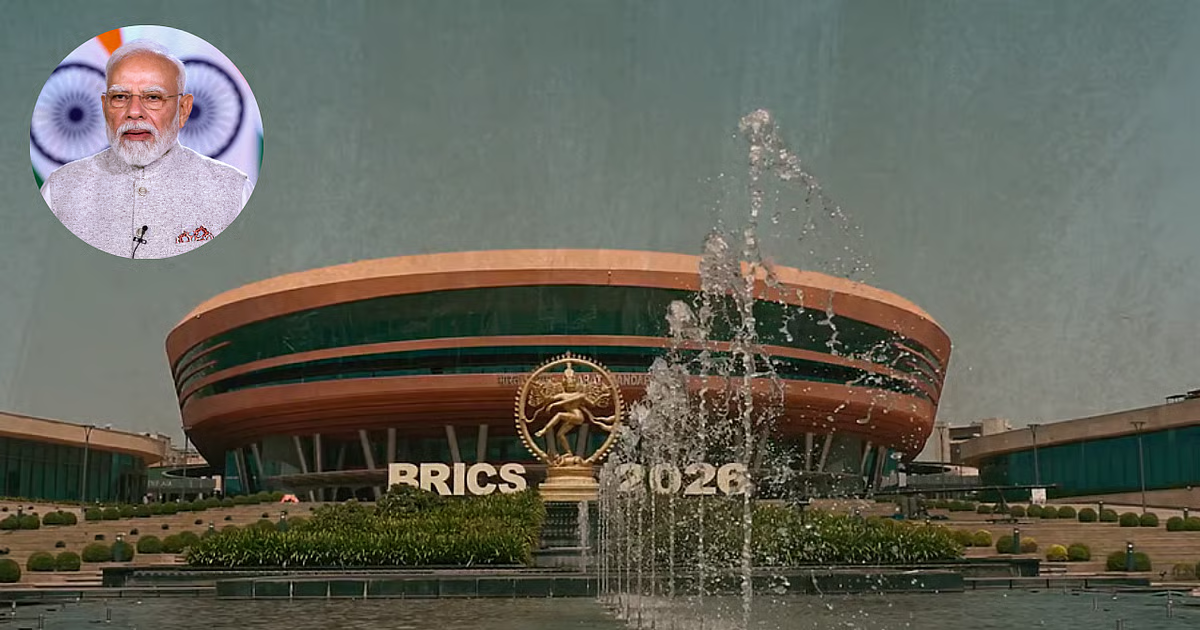
This weekend India will host the BRICS leaders’ Summit in an effort to raise the bloc’s reputation Internationally. The summit will happen despite the fact that Tehran and Abu Dhabi are on opposing sides of the IS-led attack.
More than 6 months have passed since the United States and Israel attacked Iran. They are a BRICS member since 2024. The meeting is scheduled for September 12-13 in New Delhi. Crude prices have risen to more than $100 a barrel as a result of the conflict’s virtual closure of the Strait of Hormuz, one of the major choke points in the global oil flow.
Why does BRICS matter?
The council on Foreign Relations (CFR), an independent research tank, claims that BRICS is a loose band of non-Western economies that co-ordinate diplomatic and economic activities around the common objective rather than the formal organisation.
BRICS nations strive to develop an alternative to what they regard as domination of the Western position in key International institutions. International institution such as World Bank, the Group of Seven (G7), and UN security council.
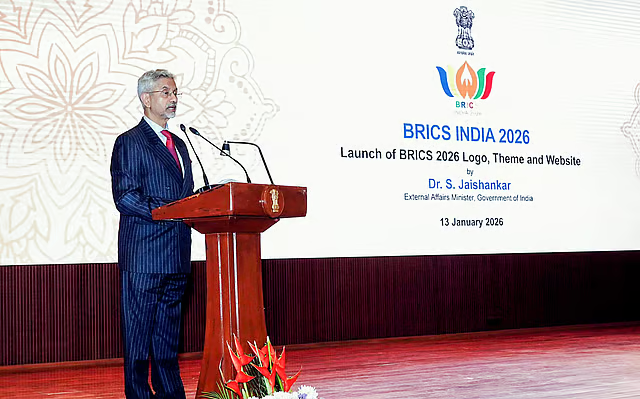
The formal BRICS expansion becomes effective on 1 January 2024. It welcomed Egypt, Ethiopia, Iran, and the United Arab Emirates as new member Nations.
The 2024 expansion comes with a range of political consequences signifying increased economic and demographic heft. The 11 BRICS Nations now compose more than a quarter of global GDP and over half of the world population.
BRICS member Nations
11 full members of BRICS are Brazil, Russia, India, China, South Africa, Indonesia, Iran, Saudi Arabia, Egypt, Ethiopia, and UAE.
- Xi Jinping — President, China
- Vladimir Putin — President, Russia
- Cyril Ramaphosa — President, South Africa
- Masoud Pezeshkian — President, Iran
- Abdel Fattah el-Sisi — President, Egypt
- Abiy Ahmed — Prime Minister, Ethiopia
- Prabowo Subianto — President, Indonesia
- Sheikh Khaled bin Mohamed bin Zayed Al Nahyan — Crown Prince of Abu Dhabi, UAE
- Mauro Vieira — Foreign minister, Brazil





Be First to Comment